Pampaneira, Bubión and Capileira
Three villages stacked up one side of a deep valley: the classic picture of the Alpujarra.
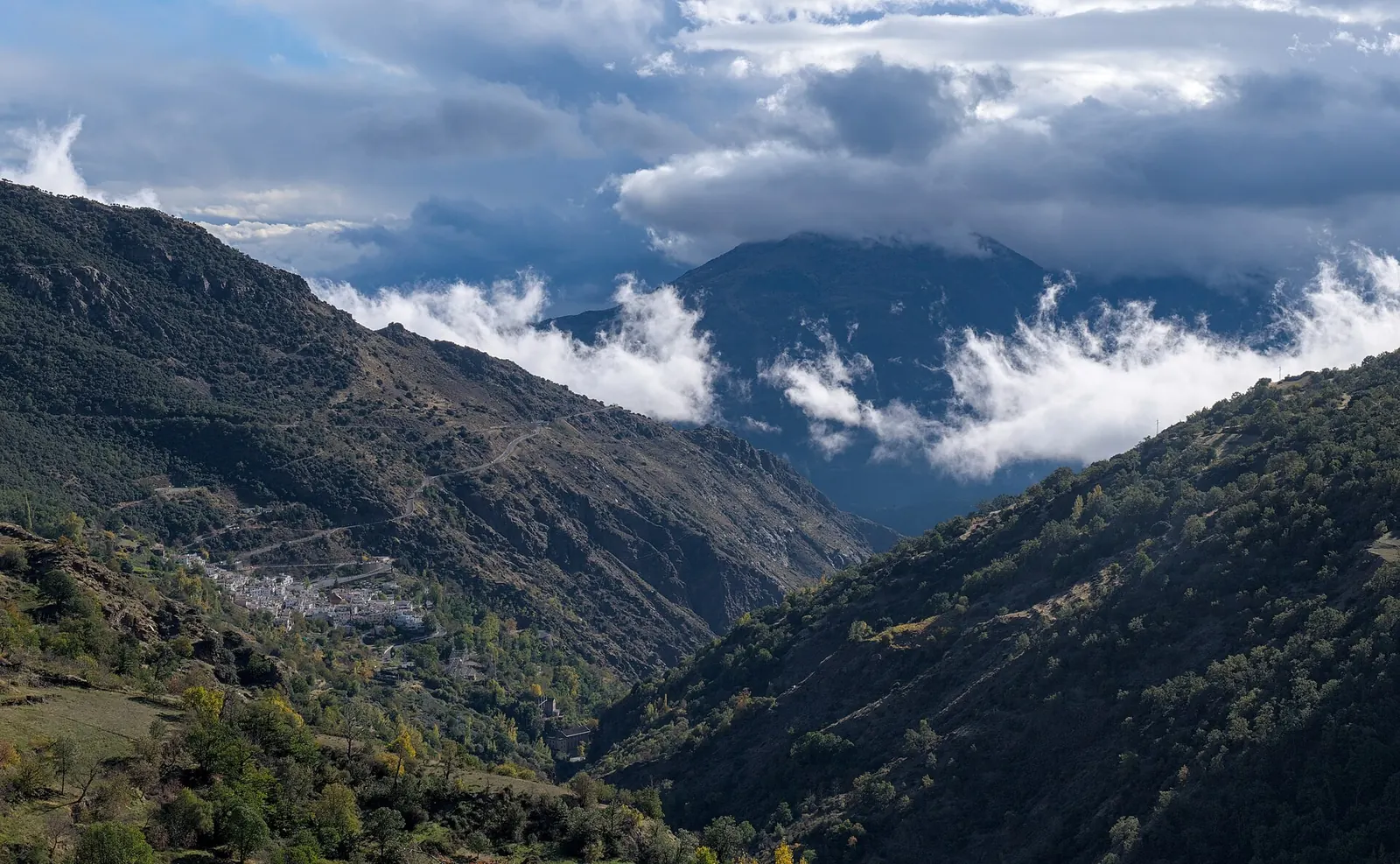
The Poqueira gorge cuts north into the Sierra Nevada, and its eastern slope holds three villages one above the other. Together they are protected as a historic ensemble, and they are where most visitors get their first sight of the Alpujarra.
Pampaneira
The lowest of the three, at a little over 1,000 metres. The main square, church and the narrow lanes with water running beside the steps are all close together. Weaving workshops sell the striped rugs (jarapas) the area is known for. It is the busiest village at midday because tour coaches stop here.
Bubión
Smaller and quieter, in the middle. Walk downhill from the main road into the older lanes, where the houses with flat grey roofs and tall chimneys are packed tight against the slope.
Capileira
The highest and largest, at around 1,440 metres. It is the starting point for walks up the gorge and for the high Sierra Nevada. In summer a national park minibus service usually runs from here up the high track towards the summits; check locally whether it is operating and book a seat early.
Walking between them
Old mule paths link all three villages, so you can walk down from Capileira to Pampaneira in about an hour and a half and take a bus or taxi back up. The circular walk down to the river and up the other side of the valley is described on our walks page.
Practical notes
- Parking is limited inside the villages; use the car parks at the entrances and arrive before late morning in spring and summer.
- Buses run from Granada several times a day, fewer on Sundays and in winter.
- Evenings are cool even in summer at Capileira's height; bring a layer.