Flat roofs, chimneys and tinaos
Why Alpujarra villages look unlike anywhere else in Andalucía.
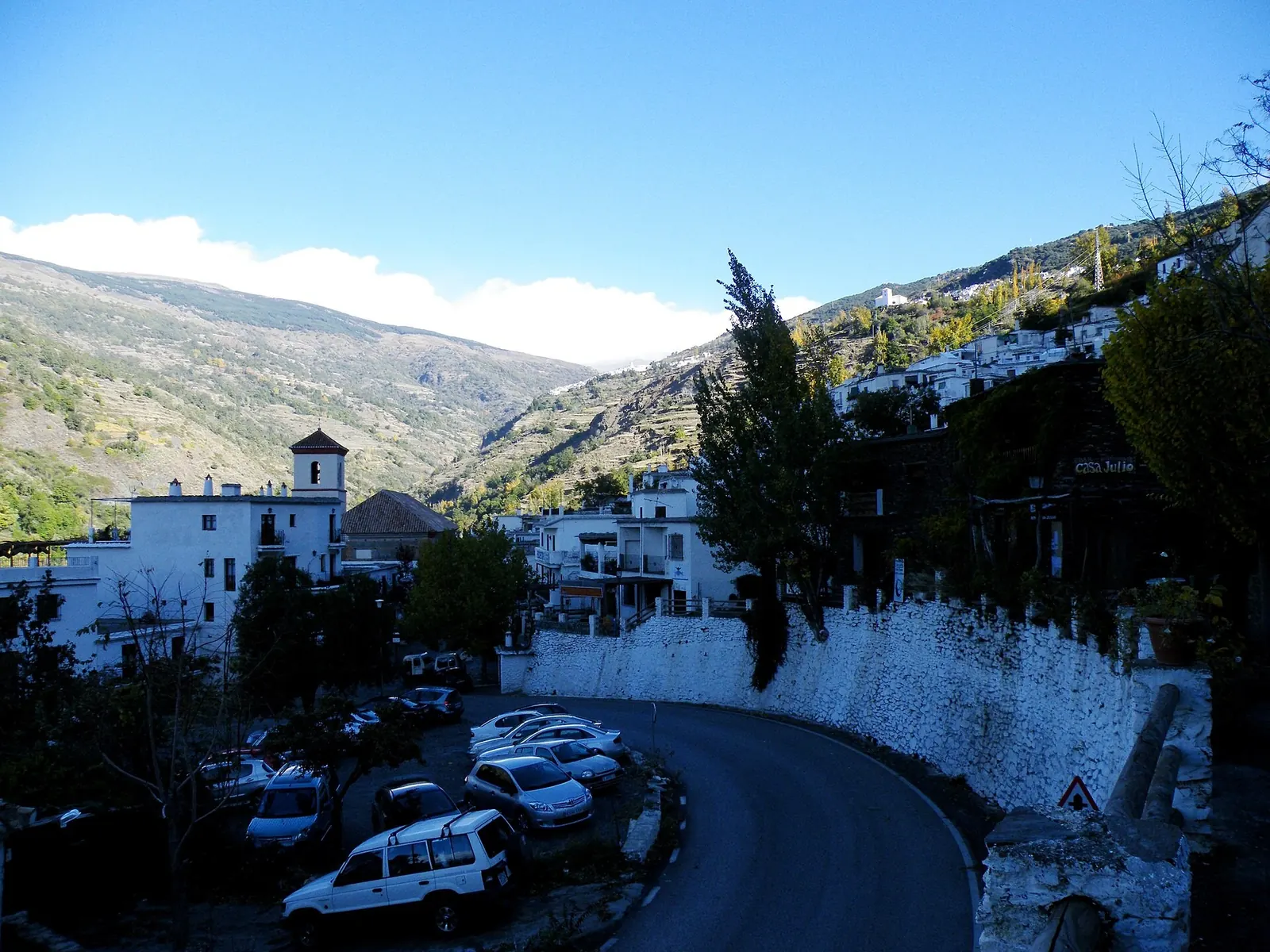
The flat roof (terrao)
A traditional Alpujarra house has a flat roof made of chestnut beams covered with slate and a layer of launa, a grey, clay-like material from the local hills. When it gets wet the launa swells and seals the roof. The roof is used as a terrace for drying fruit and peppers, and people walk across it to neighbours' houses on the slope.
Chimneys
Tall, round chimneys topped with a flat stone or slab give the villages their skyline. They keep rain out and the draught steady. Look at them from above, from the road into any village, and the roofs look like a grey patchwork with white chimneys sticking out.
Tinaos
A tinao is a covered passage where an upper floor bridges a lane, supported on beams or posts. It gives shade in summer and shelter in winter, and was often used for storing firewood or tying up animals.
Layout of the village
Houses are built close together and follow the slope, so lanes are steep and sometimes stepped. Water channels run along many streets. This dense, stepped form is often compared with mountain villages in North Africa's Atlas.
Today
Many old roofs have been repaired with modern waterproofing under the launa. If you're looking at a house, see our notes on buying in the Alpujarra.