Acequias, cortijos and water mills
The green terraces of the Alpujarra depend on a water system that is many centuries old.
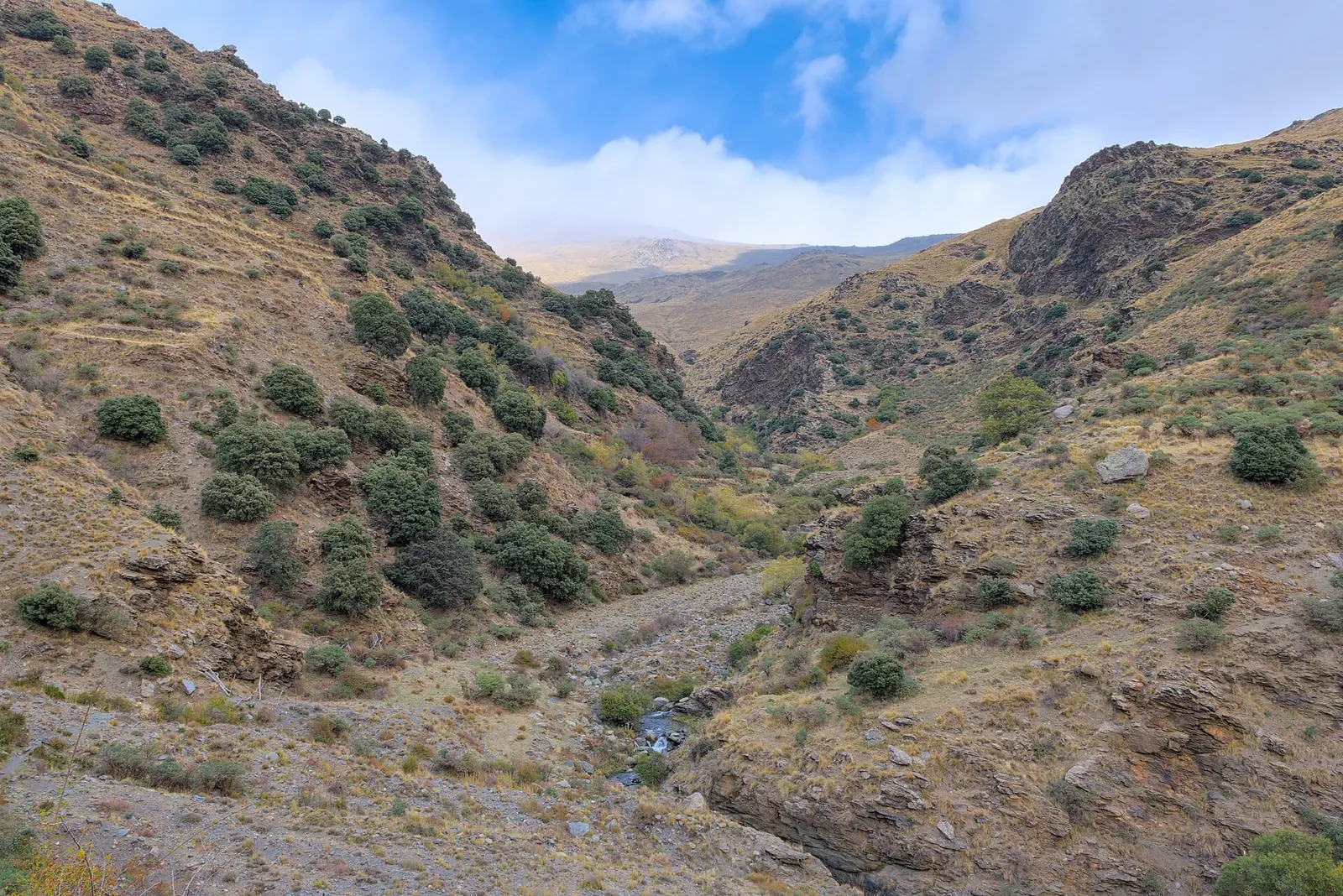
Acequias
Snowmelt from the Sierra Nevada is guided along the hillsides by acequias, hand-dug channels that follow the contour lines. Most of the system was laid out in the medieval period and is still maintained by local irrigation communities, each with its own turns and rules for who waters when.
Careos
High up, some channels are not meant to irrigate fields but to let water seep into the ground (careo). The water reappears weeks or months later in springs lower down, keeping them flowing into the dry summer. It is an early form of aquifer recharge.
Water mills
Below the villages, the rivers and channels once drove dozens of mills grinding wheat and other grains. Most are now ruins, and a few have been restored as houses. You'll recognise them by the stone channel leading to a drop above the building.
Cortijos
A cortijo is a farmhouse outside the village, often with a threshing floor (era), animal stables and terraces around it. Many walking routes pass these, some still farmed, others abandoned.
Walking beside water
Paths along the acequias are among the most pleasant walks in the region: level, shaded and full of sound. Please don't block or step in the channels; they are someone's water supply.